
“Breastfeeding your new baby is the best!” “It is the way to go”. “There are so many health benefits”. “Its FREE!”, “It will help you loose weight”, “the skin contact bonds you and your baby”, “Breastfeeding is the most natural thing!”. These are the encouraging words we are told when pregnant with our first baby.
Then we go through labor, and that was rough and a whole different story. Now we are ready to enjoy bonding by breastfeeding are newborn! But its not a walk in the park like we’ve been told. Now, even in the early days of breastfeeding the nurses, friends, and even husbands are seeing you struggle and saying “Lets try a bottle”, “maybe try the breast pump?”, “formula is not that bad”, “Maybe its not enough milk?”.
Let me encourage you through the pain and confusion. I want to come along side you and help you through the first days and weeks to establish a healthy breastfeeding journey and rhythm by correcting a few misconceptions, and helping you with common breastfeeding issues.
- Breastfeeding Timeline ~ A Year of Breastfeeding
- “Breastfeeding is Easy” ~ Breastfeeding Gets Easier
- “Breastfeeding Happens Naturally” ~ What ever you do will become natural to you.
- “I Have Low Milk Supply” ~ Your milk supply is regulating
- “My Baby has a bad latch” ~ How to help your baby with a good latch
- Mastitis and Pain Relief
Breastfeeding Timeline ~ A Year of Breastfeeding
This is not at all a perfect schedule or exactly what the first year of breastfeeding will look like. This timeline is just an example of how things can change over time.
Day 1-3
In the first days of breastfeeding your milk is called colostrum. It is high in protein and antibodies to build up your new baby’s immune system. Your breast will seem a little bigger as you start to nurse and latching can be difficult during this time. It is normal for your baby to loose weight. Stay strong, I’ll cover more of the difficulties and how to get though them later on, so keep reading.
Days 2-6
Somewhere between 2-6 days Your ‘milk’ will ‘come in’. Oh My Goodness. This is so strange! Your breast, literally over night have tripled in size. Breast engorgement is when your are so full of milk your breasts are hard and are continually leaking out milk. You feel a since of urgency to get your baby to get a good latch and eat up! If you have had trouble latching, that issue may (may not) at this time get resolved. This time nipple pain is common, even with a good latch. Don’t loose heart! Your milk supply will regulate soon and the pain will go away.
Days 6–14
Your milk will start regulate and will change to a Transitional Milk. The milks protein levels drop while fat, lactose, and calories rise to fuel growth. If you keep a schedule during the day and nurse on demand at night your milk supply will regulate faster.
1–3 months
You milk will produce more lactose for rapid brain growth. Your body will start to regulate your milk production and you will leak less often and feel less full. This is normal, it does not mean you have low milk supply.
3–6 months
Your milk will increased in fat for a more active baby. You baby will be awake for longer and also sleep longer, making nursing ever 3-4 hours more doable. The fat will also make them more full for longer. This does not meal you have low milk supply, its regulating.
6–12 months
You milk will rise again with more immunity factors as your baby is introduced to new solid foods as well as everything else they put in their mouths. Along with the introduction of solid foods your milk production will continue to regulate as you may be skipping a breastfeeding session here and there because of new eating routines.
12+ months
Your milk becomes even richer in antibodies for continued protection as they get older and experience many new things. At this point you might only be nursing once or twice a day (me), where as others (my sister) my still be nursing 4-6 times a day. There’s no right or wrong.
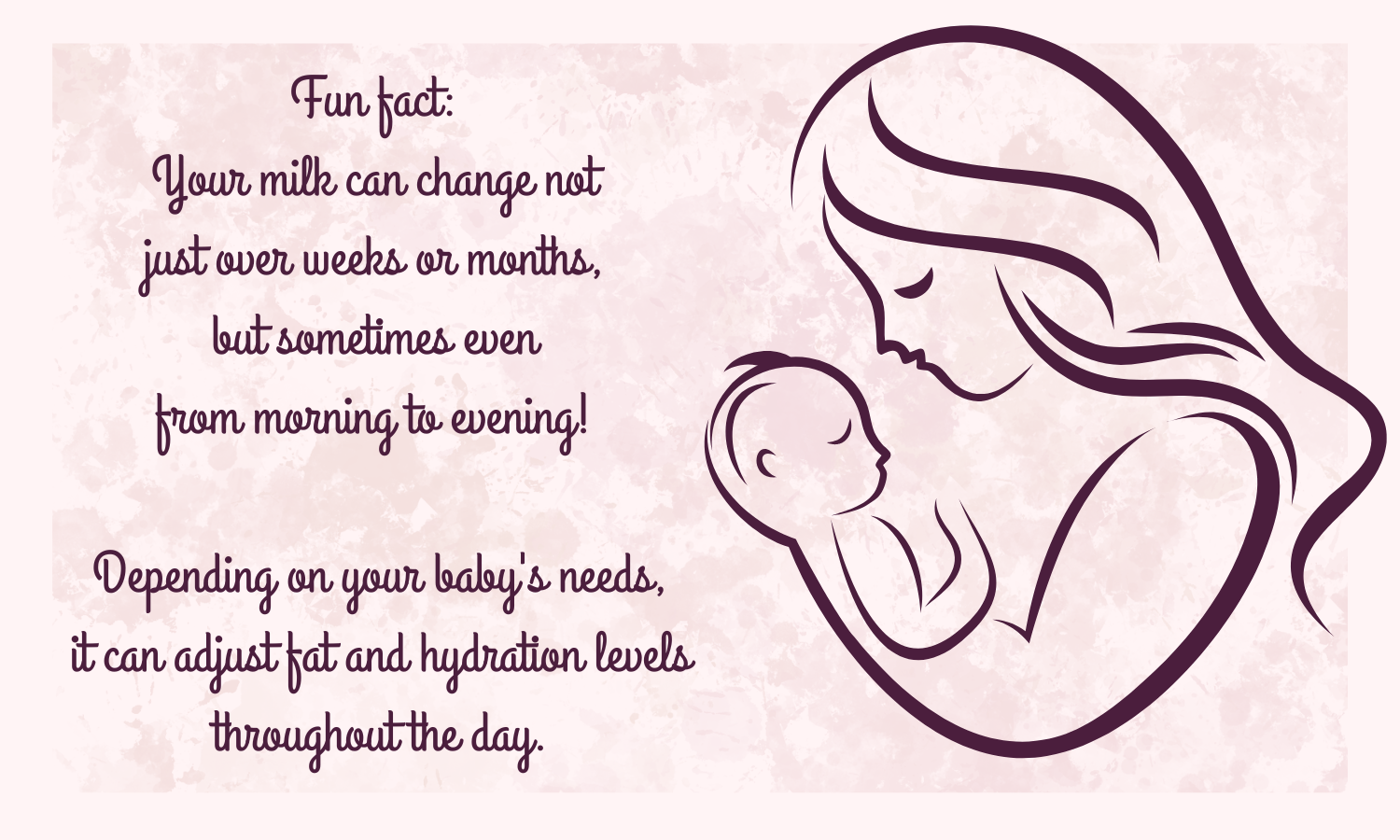
“Breastfeeding is Easy” ~ Breastfeeding gets Easier.
At first breastfeeding can be a challenge. The first days and weeks of breastfeeding is full of discomforts, changes and challenges and for new mothers this can be discouraging and a toll on your mental health. You’ve probably been told breastfeeding is easy and then when you have a hard time your are told that is normal. Now, your confused. Will breastfeeding always be hard?
It is a common misunderstanding to believe that the way you experience breastfeeding in the beginning will be how it always is. This is good news. Instead of worrying the first week of how you are going to be able to do this for a whole year take one day at a time. Each day you will learning different things, gain confidence and see results soon enough.
“Breastfeeding Happens Naturally” ~ What ever you do will become natural to you.
Breastfeeding is the most natural way to feed your new baby but that doesn’t mean it comes naturally for everyone. Educating yourself, preparing yourself mentally, getting guidance from support groups and lactation experts are all ways you can prepare so that breastfeeding feels more natural. If you expect to just be able to nurse because its natural you may be surprised. Difficulties do arise and when they do you don’t want to feel like a bad mother because you are having trouble but that’s often what happens. We have the sense of loss when things don’t go the way we assumed they would. Don’t assume you will just figure it out. Gain the help you need and strive to figure it out.
As you learn to breastfeed you will create and adapt to your own rhythm. Your baby will also adapt to whatever you do while you learn how to help your new baby breastfeed. For example, if in the first few weeks you start pumping and feed with a bottle at night and nursing during the day, by week 3 that will feel natural to you. By 3 month you wont be able to think of another way to do things. If you hold your baby in a certain position that is what you will both get used to that position. If you co-sleep and nurse at night, that is what you will both get used to. It doesn’t matter how you do it, find what works for you and make that your natural way of breastfeeding.
“I Have Low Milk Supply” ~ Your milk supply is regulating
When you milk first comes often we often have a high volume of milk and suffer from engorgement. We wake up in the middle of the night feeling the sensation of milk filling up breast and the baby is of course sleeping. You may be soaking through nursing pads every couple hours due to leaking and your thinking this is how it should be and will be for the next year of breastfeeding.
Your milk will soon regulate. Your body produces milk based off of demand. If you nurse you baby on a schedule your body will regulate a lot faster. You will feel full and ready at the same times everyday. Whether or not your baby is crying, hungry or even sleeping you nurse them at those sometimes. Often baby’s on a schedule during the day will sleep longer at night. Especially if you schedule the day and nurse on demand at night, you will find they can sleep 8 hours by 8 weeks old.
If you breastfeed on demand you will notice times when you are full and baby is not hungry and you will notice times when your baby is hungry but you aren’t feeling a full sensation. Even if you don’t feel a full sensation you can still nurse them. You still have milk. Once they start sucking your body get the hint and will start to produce enough breast milk.
As time goes on you will stop feeling ‘full’ of milk. Often when this happens people assume they have low milk supply. This is not low milk supply it is an appropriate milk supply.
You may also stop experiencing let down, you may stop leaking, your baby may even nurse less frequently or more frequently. Non of these are true signs of low milk supply issues.
If you think you have low milk supply but are not sure read Milkology’s article on “Sign of low milk supply (and 12 fakeouts)” Shes does a great job of helping you understand this common misunderstanding.
Here are 3 ways you can tell if you truly have a milk supply issue.
Weight Lose
If your baby is loosing weight. In the beginning it is normal for your baby to loose some weight and gain it back again. After those first 2-3 weeks they should be back to their birth weight and only be gaining weight from here on out. There may be times when they stay the same weight but aren’t actually loosing weight.
My son at 5 month old suddenly lost 5 lbs, from 16lbs to 11lbs! (He was 9 lbs when he was born). This was extremely concerning at that time I found out I was also pregnant with our second! Surprise! I still had plenty of milk and from let down alone I still getting 4 oz in the mornings. The problem for me was the richness of fats in my milk. I still breastfed my oldest till the day my second baby was born but had to supplement with formula and solid foods earlier then I expected to. It took him a while but he gained back his weight and is now a very healthy, smart, active 7 year old.
Dry Diapers
If you baby is not peeing or pooping regularly. Especially in the early days you may be told to track your baby’s wet and messy diapers.
Dehydration
If you baby shows signs of dehydration. Those signs include, dry mouth, tear-less crying, dark sunken eyes and/or dark urine.
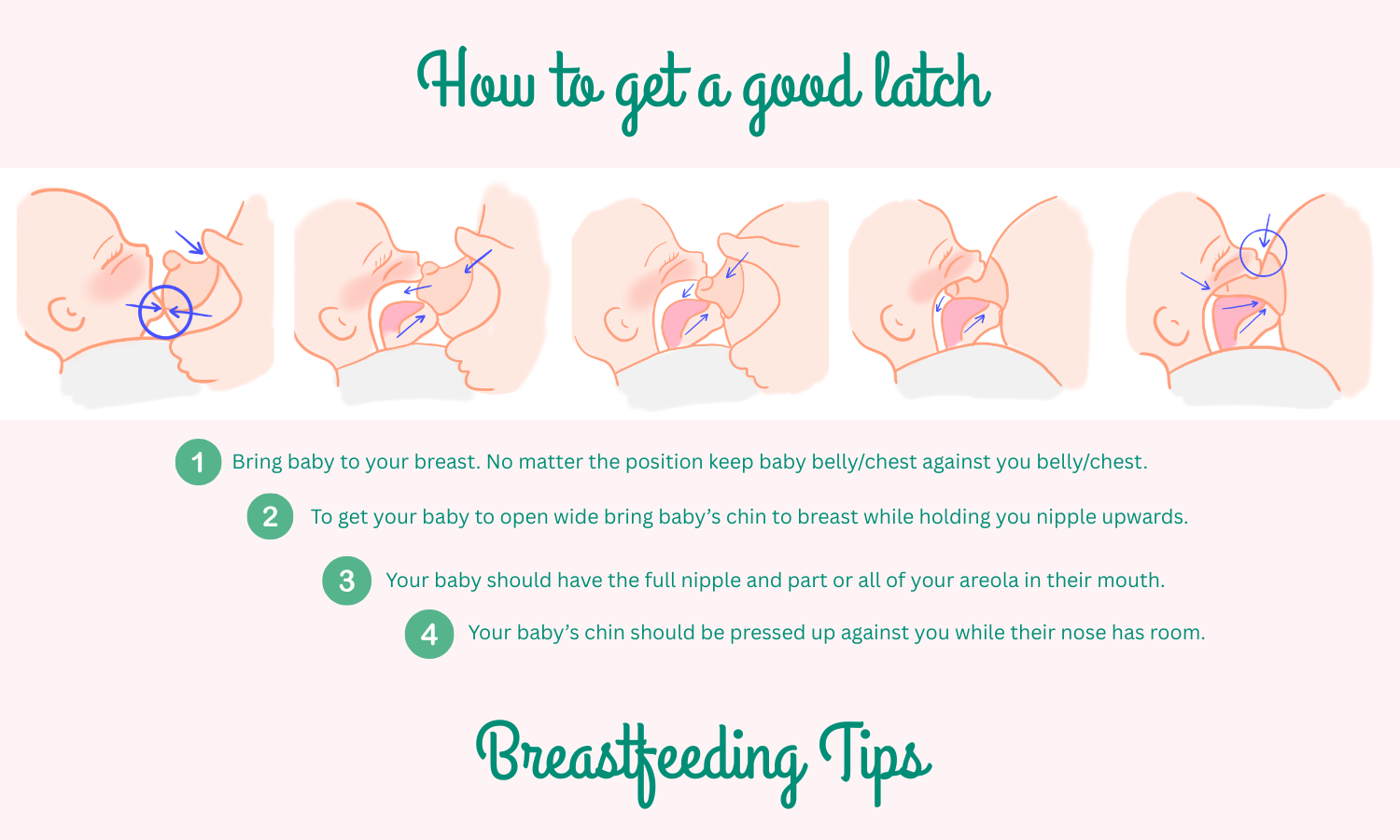
“My Baby has a bad latch” ~ How to help your baby with a good latch
In the first days of breastfeeding getting a good latch is important. Some of the first advice I got while breastfeeding was “Never let them nurse on a bad latch”. Letting your new baby breastfeed on a bad latch will train them to latch incorrectly. When your baby has a bad latch it can cause sore nipples, cracked nipples, low milk supply and plugged milk ducts. With a poor latch you baby will not be getting a good milk flow. To insure you new baby is getting plenty of milk you will need a good latch.
What does a good deep latch vs a bad shallow latch look like?
A shallow latch is when your baby is latched on the nipple with little to no breast tissue in the baby’s mouth. With a deep latch the whole nipple and part or all of the areola will be in the baby’s mouth. Your baby’s chin should be pressed up against you breast. Don’t be afraid if the nose is also pressed up a little, they can still breath.
A deep latch should be comfortable and painless. Although even with a good latch there may be some other discomforts due to engorgement, soreness, inflammation of the breast or another underlying problem. If you are experiencing pain check to make sure your latch is deep before assuming its a bigger problem.
Here are a tips and tricks to getting a good latch
- Feeding Position. When breastfeeding, the position you hold your baby matters. The are many different feeding positions but no matter if you are sitting up or in a side-lying position you want to hold you baby’s belly/chest against your belly/chest so that the baby’s head is straight when latched. If the baby’s head has to turn to latch they will be uncomfortable a pull.
- A deep latch. If your baby has a shallow latch it will cause sore nipple pain, bad milk flow and you could get a plugged milk duct. To get a deep latch bring you baby to your breast. Guide their chin/bottom lip to your breast first. To open the baby’s mouth you can place your finger on the baby’s chin and bring it down. Bring you nipple to their upper lip/nose. Have your baby open and reach upwards to latch. This will insure a wide mouth for a deep latch.
Mastitis and Pain Relief
In the early weeks of breastfeeding there can be many factors to why breastfeeding is painful. Mastitis is by far the worst breastfeeding experience I have ever had. And I had if twice with my fifth baby. Thankfully it never led to an fever and infection and I never had to take antibiotics for it. If you know the sign you can catch mastitis before it turns into something really bad. Here I will help you understand engorgement and mastitis so you can avoid a breast infection.
Engorgement
This, I would say is the most common reason for pain in the early weeks of breastfeeding. The best way to relieve engorgement is to nurse. As painful as it is, it is the best way. Use a warm compress and hand express a little before you nurse, this can make a big difference. If its too painful to nurse you can use an electric breast pump but I do not recommend pumping for engorgement. Pumping will relieve the pain but it will also encourage more milk production but the problem with engorgement is too much milk. Instead of pumping, hand express just enough milk to relieve the pain. The best way I have found is to take a shower and massage the breast with olive/coconut oil. Gently massaging from the armpit to the nipple with your hand in a C shape. A few centimeters always from the nipple gently squeeze to express milk. By hand expressing you will release pressure without cueing for more milk production.
Mastitis
Mastitis is an inflammation of the breast. This can often be caused by plugged milk duct after being engorged for too with no relief. Mastitis can also be caused by poor blood and lymphatic circulation. To avoid mastitis be sure to avoid engorgement for long periods of time such as overnight. Ware loose clothing, no tight bras. To keep your blood and lymphatic circulation do arm circles and arm stretches everyday. Mastitis, along with breast pain, can cause flu-like symptoms like aches all throughout your body, chills, hot flashes, sore lymph nodes in arm pit and neck, I personally also expired a lot of pain in my feet.
To relieve pain due to mastitis you want to bring inflammation down. Use a warm compress before you nurse and cold compress after you nurse. The warm will help milk flow and the cold will bring down inflammation and slow down milk production. Use a cold compress on your breast and arm pits and anywhere else that aches. You can switch back and forth with heat and ice if that feels good but always end with ice to bring down the inflammation of the breast. Continue to nurse. Don’t stop breastfeeding if you thing you are sick. Often breastfeeding will make things better and to stop might make things worse.
Breast infection
Mastitis and a breast infection often go hand in hand. If you have a breast infection you have mastitis but not always do you have an breast infection when you have mastitis. If you have mastitis symptoms check your temperature every couple of hours. A fever is a sign of infection. If you have flu-like symptoms with no fever then its more likely to be swollen lymph nodes or a plugged milk duct then an infection. Yet both of these can lead to infection. Either way its best to contact or Doctor, OBGYN or midwife as antibiotics may be need. For pain relief, you can start with the cold and warm compresses but for more idea and help read “24 all natural remedies to cure Mastitis” by Motherhood Sprouting.
Breastfeeding Encouragement from others
Encouraging others to embracing their breastfeeding journey no matter what hardships come along with it is community is all about. We are so blessed to have online communities this days and I encourage you to ask questions or share your most helpful breastfeeding tip in the comments for others to read. I can’t tell you home many times the comments to a post or video has answered my questions better then the actual post or video.






Leave a Reply